 Strategy: No Weight Loss
 Strategy: No Weight Loss
Backpacking consumes a high amount of calories. To avoid weight loss, you will generally need to consume a minimum of 2,000 calories hiking flat terrain and 4,500+ calories in mountainous terrain.
Besides terrain, other factors that impact calorie expenditure include body mass, age, movement efficiency, carrying-load, and environmental conditions. Most hikers are gradually ascending and descending and carrying a moderate pack weight.
For instance, a small person weighing 120 pounds (54 kg) burns approximately 420 calories per hour, carrying a typical backpacking load (20 lb / 9 kg) in hilly terrain. In contrast, a person weighing 180 pounds (82 kg) burns about 625 calories per hour backpacking in these same conditions.
As you can see, the more you weigh, the more calories you’ll burn. Likewise, as with any activity, you’ll burn more calories if you move faster or longer.
For simplicity, the average backpacker weighing 160 lbs (62 kg) hiking in hilly conditions for 8 hours per day while carrying a typical load will burn approximately 4,400 calories daily.
An average weight (160 lb / 62 kg) backpacker must consume 4,400 calories (18,410 kJ) daily to avoid weight loss.
If you have a fitness tracking device, you can accurately calculate calories burned. If you don’t have one of these tools, this online calculator will give you a good idea:
Backpacking Calories Burned Calculator
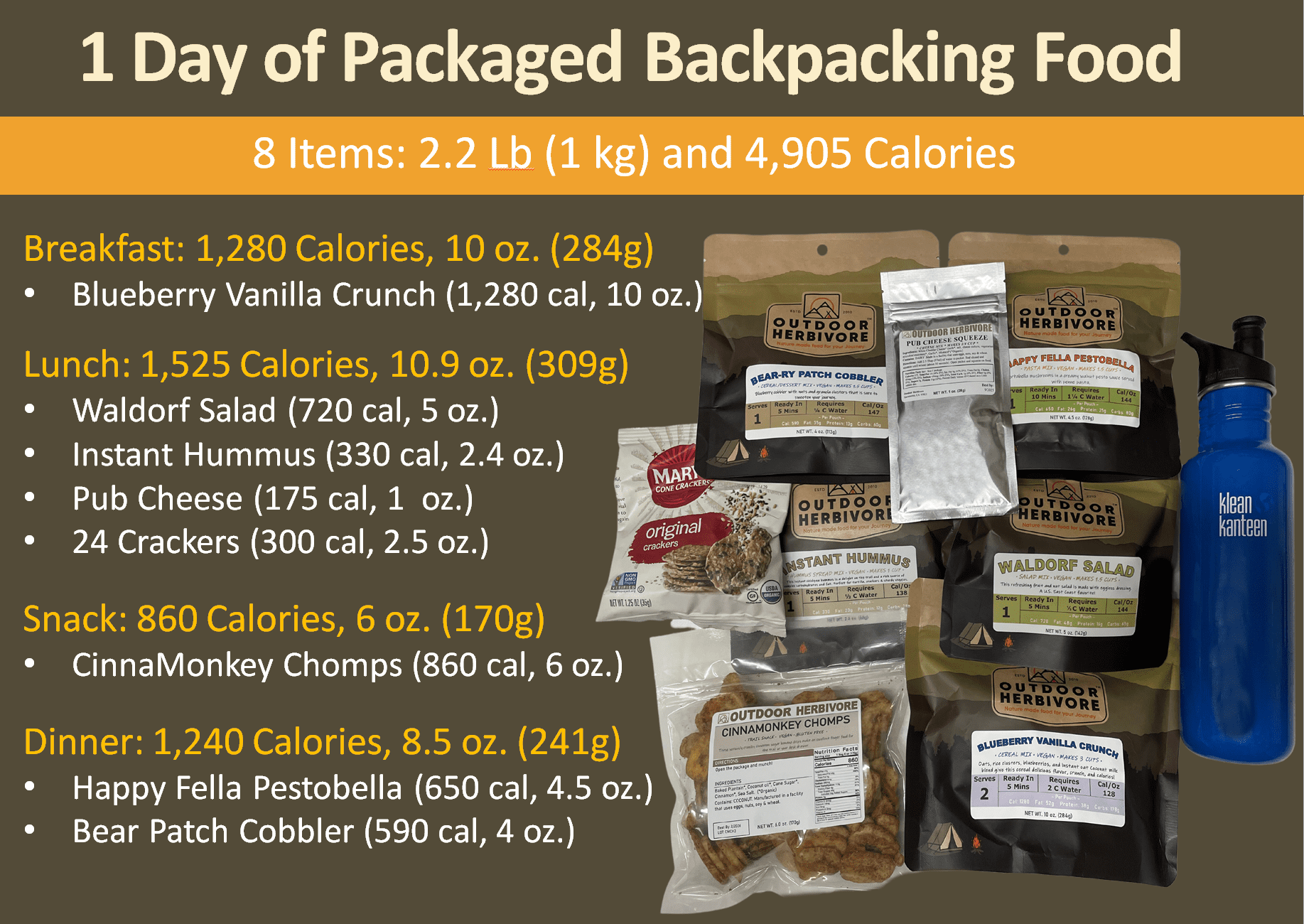
What 4,900+ calories look like in 1-day worth of packaged backpacking food.
Tips for Consuming Extra Calories
1. Snack Frequently!
This simple suggestion is often overlooked. Munching throughout the day on high-calorie, carbohydrate-rich healthy snacks such as trail mix (GORP), Granola, nuts, seeds, dried fruit, and energy bars will maintain your caloric needs. Glucose, the molecule you get by digesting carbohydrates, is the body’s primary energy source. Mix it with some fat to slow the energy release, and you’ve arrived at the perfect snack for hiking. Some good choices for backpacking snacks:
Energy Bars
- Vegan Choices: LÄRABAR and ProBar Meals. Both brands are plant-based, with various flavor combinations that are nutritious and delicious. Larabars contain fruit and nut ingredients. Most of the bars have from 200 – 400 calories. Learn how to make your own trail bars.
- Vegetarian Choices: Greenbelly. These bars are created specifically for backpackers, so it is no surprise that each 5.5 oz (155g) packet contains an average of 650 calories per package. Note: All Greenbelly meal bars have honey, which may not be acceptable if you are vegan.
GORP & Granola – The possibilities are endless. Find a mixture you like! Here is a Granola Recipe, which we make with a few substitutions (to make it healthier and vegan). Our changes: use ground flaxseed instead of wheat germ, brown rice syrup for honey, and coconut oil for vegetable oil.
Backpacking Finger Food – We’re constantly making something new at Outdoor Herbivore. Check out our latest high-calorie snacks.
As with eating any food, especially those containing nuts and seeds, make sure you maximize calorie extraction by championing chewing.
2. Add “Extra” Fat Calories to Meals
Consume more fat to make up for lost calories from hiking. Fat is the most energy-dense food, providing 9 calories per gram, which makes up more than the combined calories of protein (4 calories per gram) and carbohydrate (4 calories per gram).
Not all fats are good. The good fats come mainly from vegetables, nuts, seeds, and fish. The two categories of beneficial fats include monounsaturated and polyunsaturated fats. Pack these healthy, high-fat foods to get the highest number of calories for the least amount of weight –
Unsaturated Fats – Unsaturated fats from vegetable and nut sources include olive oil, vegetable oils (safflower, corn, sunflower), nuts, seeds, powdered peanut butter, and nut butter. The packets of olive oil are handy for adding calories to all backpacking meals. See also our tips for packing bottles of oil.
Polyunsaturated Omega-3 Fatty Acids
- Chia seed – Excellent for endurance and long-term storage (4 – 5 years). Add chia seeds to oatmeal, cold cereal, and drinks. The seeds are gelatinous because they contain soluble fiber, becoming gummy as they absorb water. Chia seed is excellent for people with sensitive digestion although some people can’t tolerate the slimy texture of chia seeds.
- Flaxseed (ground) – Grind the seeds right before your trip to prevent oxidation and spoilage, which occurs quickly. Ground flaxseed provides the maximum nutritional benefit. If you don’t grind the seeds, be sure to chew the small seeds to extract the calories. Flax is a wonderful thickener and calorie-boost for soups and oatmeal.
- Sesame seed – Add to pasta, rice, or top on a trail sprout salad. Smear Instant hummus powder made with ground sesame on a tortilla. Add gomasio seasoning to rice meals and soups. You can make gomasio by toasting hulled sesame seeds with salt and dried seaweed (optional).
- Hemp seed – Use the same way as flaxseed, but no need to grind. Nice with oatmeal.
- Soybeans (tempeh, tofu) – the dried form called Koya-dofu or Shimi-dofu can be found in the Japanese section at Asian grocery stores or online. Purchase soy that is organic or non-GMO.
- Wakame (dried sea vegetable) – Can also be found in Asian grocery stores. Adds a sweet flavor to soups and rice dishes.
- Nuts – Such as macadamia, walnuts, almonds, cashews, and pecans provide great flavor when added to trail snacks, pasta dishes, and oatmeal.
Also, refer to our list of high-calorie vegetarian fats. A diet high in fat is not dangerous to a hiker’s health because it gets used by the body for energy while hiking.
Tuna Fish Foil Packets for Fat and Protein?
We are a vegetarian food company, so our opinions may be biased here. Regardless, some facts support our view: Over 70% of the world’s fish population is severely depleted due to overfishing. Many sources recommend eating fish 2-3x per week for the Omega 3 fat benefit. The popularity of this advice has helped contribute to overconsumption. Fish farming (like factory farming) fulfills the present demand but has many negative consequences – surrounding water is polluted with concentrated fish waste, antibiotics, and diseased fish. The result is a cheap-to-buy, tasteless fish with inferior nutrition. Instead of eating factory-farmed fish, purchase wild-caught cold water fatty fish (or catch it yourself). Coldwater fish such as salmon, mackerel, herring, sardines, and anchovies are high in healthy omega-3 fat. Print out the pocket guide to seafood to help you choose wisely. For backpacking, look for foil packets of salmon rather than tuna – if you must. Otherwise, stick to the plant-based omega-3 sources above.
3. Eat High Carbohydrate Foods
Carbohydrates, including starch, sugar, and fiber, are the body’s primary energy source. We get 4 calories from each gram of starch (or sugar). Fiber does not provide calories because we can not break it down during digestion. Nonetheless, consuming high-fiber foods while thru-hiking is essential because it helps maintain healthy gastrointestinal function and makes you feel full longer.
Focus on consuming carbohydrates (starches) primarily from whole grain sources. These take longer to digest in the body, which means they’ll give you gradual energy throughout the day. Although protein provides 4 calories per gram, it is used for growth and tissue repair rather than for energy.
- Sweet Calories – Look for organic dried fruits and naturally harvested sugars (maple sugar and honey) instead of refined sugars. Refined sugar, found in candy and baked goods, is called an “empty calorie” food because it provides calories but no nutrients.
- Fast Cooking Grains and Pulses – Such as couscous, instant pasta, instant brown rice, instant lentils/beans, potato flakes, and instant quinoa.
- Milk Powders – Soy milk, coconut milk powder, and full-fat dairy. ‘Nestle Nido’ is a popular brand of full-fat dried milk. Many of the other instant milk powder brands are non-fat. ‘Better than Milk’ makes several instant vegan beverages. We sell Instant Organic Soy Milk Powder in bulk (140 kcal/oz).
See also Vegetarian Backpacking Foods for additional suggestions.
4. Eat 3 Large Meals per Day
If you purchase commercial backpacking meals, make sure the portions are adequate. Plan to eat twice the amount that you eat at home. Test the meals at home first to ensure you like the taste.
- Calories to Weight – Look for meals that will provide you the “lightest bang for your buck,” but do not look at the price per calorie alone; otherwise, you’ll end up with junk food. Find higher-quality food and then compare calories per unit of weight! 100 calories/ounce is a reasonable minimum; add extra fat calories mentioned above to boost meals requiring it (vegans will have to do this).
- Check Ingredients – Many food manufacturers cut costs by adding cheap fillers to food products. These meals will not provide the sustained energy levels you will need for a thru-hike and may interfere with digestion. These fillers are often processed simple carbohydrates, which will leave you feeling hungry and tired (even miserable) later.
- Check Sodium – Would you dump the entire salt shaker into your meal at home? Stay clear of any meal that contains more than 1000 mg of sodium per serving. The guideline for healthy adults is to consume no more than 5.8 grams of salt per day (2300 mg sodium, about 1.25 tsp) to replace the amount lost daily through sweat.
5. Drink High-Calorie Beverages
Consume drinks higher in calories, such as shakes, smoothies, and fruit juices, instead of always drinking plain water. There are many brands of powdered shake mixes that work well for backpacking.
- Fruit Drink – Make a fruit drink from dried fruits by soaking it in water as you hike. We like to soak dried mango or strawberries. True lemon/lime packets are also a nice way to freshen up water.
- Hot Recovery Drink – Treat yourself to a cup of hot chocolate or hot apple cider as part of your evening routine. Have a cup o’ joe in the morning using freeze-dried instant coffee. Nescafe Classico and Starbucks VIA are in most grocery stores. Outdoor Herbivore also carries freeze-dried pouched coffee in a scent-free portable pouch that makes 14 to 21 cups of 8 oz. of dark roast coffee (depending on desired strength), making it suitable for those that need more than one cup in the morning!
- Alcohol – Reward yourself with alcohol in town because 1 gram of alcohol provides 7 calories. Beer is an excellent source of calories, between 150 – 200 calories per 12 oz. A margarita is even better, coming in at a whopping 700 calories!
Fatten Up Before Your Thru-Hike
The body depends on burning calories from fat stores once it burns through carbohydrates from foods. Many of us have an unlimited storage capacity for fat, making it our largest energy reserve. Start adding fat calories to your diet before you plan your thru-hike. Eat the foods listed above and have that extra beer.
We can’t help to notice how many thru-hikers we meet that look emaciated. Eat as much food as possible when you resupply in town or take a zero-day.
Read on if you have excess fat to lose.
Strategy: Weight Loss
It takes 3,500 calories to lose one pound. In other words, one pound of body fat equates to approximately 3500 calories. To lose 1 lb of fat each week, you will need to burn off 500 additional calories each day.
500 x 7 = 3500
As a result, a 1000 per day calorie deficit will allow you to lose 2 pounds per week. This number is considered the maximum amount of weight you should lose to stay healthy. Consume about 2000-2500 calories per day if you are backpacking at an average rate (3000 calories) to lose 1 – 2 lbs per week.
If you are trying to lose weight while hiking, consume enough complex carbohydrates. Carbohydrates are needed to restore glycogen (muscle fuel), the energy you’ll need to continue your hike.
Final Thoughts
Although calorie content is an excellent way to evaluate backpacking food, judging food by only the calorie content is overly simplistic. How your body absorbs and uses food energy depends on the macro and micronutrient makeup. Eating ‘clean’ foods such as whole grains retains the most nutrients and keeps fiber intact. Fiber slows glucose release, making it the ideal food for hiking and other endurance activity.
Good nutrition promotes good health, providing you with greater resistance to illness. Eating right will also improve your mental outlook and help you sleep better.

4 thoughts on “Thru Hiker’s Eating Strategy”
Do the figures for calories burned include the baseline (2000 calories a day or whatever it is) for day to day life, or do they just represent the extra exertion of backpacking?
I have a question about the salt figure you list. Is that the salt requirement for an average person or a hiker sweating up to 2 gallons a day?
If I’m bothering to put electrolyte mix in my water, I question how concerned I should be about the salt in my dinner. But if that’s already the hiker number, that would be good to know.
Your sodium needs are dependent on your sweat rate. 2300 mg of sodium is an average daily loss. The amount of sodium in sweat ranges from 220 to 1,100 mg which averages about 500 mg sodium/lb sweat. 1/2 teaspoon of table salt has 1,150 mg of sodium which is about how much a backpacker could expect to lose in 2 lbs of sweat. If you are sweating heavily, you will lose much more sodium and need to consume more.
I love it! nice informational post my friend, I learned a couple tips…thanks.