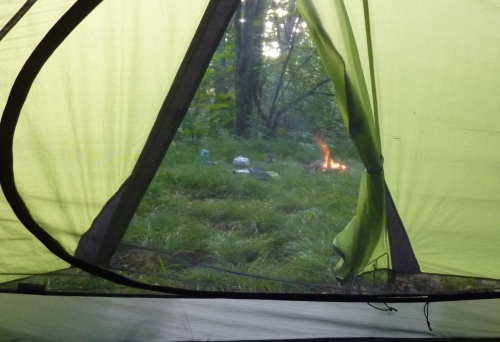
Finding a good campsite comes down to surveying the area for favorable conditions. Here’s what to look for –
Inaccessible to Vehicles
If you want to enjoy a peaceful camping experience, you have to get at least a mile away from any roads or parking lots. Doing so will eliminate vehicle noise, doors slamming, and other annoyances which detract from a natural wilderness experience.
- Statistically, you will be much safer when camping away from parking lots and roads. Most criminals will not walk more than 10 minutes from a public location to commit a crime.
- Do not camp right off a trail. Find a spot at least 100 feet away. You are less likely to be disturbed by hikers and animals that frequent the trails searching for food.
Elevation
Find higher ground that will allow for proper drainage. If it rains heavily, you are less likely to be caught in a flood.
- If you are in a mountainous area, you will find fewer ticks, mosquitoes, and other annoying insects at elevations above 4,000 feet where it is often cooler; however, finding water at higher elevations can be more difficult.
- Avoid camping in lowland areas during the colder months because colder air collects at lower elevations.
Wind
We like to camp in open and breezy areas in the warmer months. This usually provides a good view and keeps the mosquitoes away. However, bear in mind that the summer months may often bring sudden & unexpected storms.
- The wind can be helpful, but you don’t want to set-up your tent facing the wind. The location should allow for a slight breeze to help you stay comfortable, keep your tent dry from condensation, reduce flying insects, and help maintain a campfire.
- Most wind occurs from the west, so you can usually find a less windy location on the east or south side of hills or trees. This is especially important in the summer months when sudden & unexpected storms bring high winds & rain.
- A tent facing east will catch the first rays of sun in the morning, helping you to wake naturally and dry your tent from any condensation.
Environmental Hazards
For obvious reasons, avoid sleeping near any potential hazards.
- Avoid locations near large boulders and falling rocks.
- Stay away from dry river gullies as a localized storm will quickly flood these areas.
- Do not set-up shelter underneath dead or dying trees. If a strong wind or storm occurs, the branches are likely to drop on your tent.
Level Ground
The ground should be relatively flat.
- Ensure there is a sufficient area to support your tent free from rocks, stumps, and roots.
- Look for firm and well-drained soil. If it rains, you will not be flooded.
- If the ground is sloped, arrange your tent so that you will sleep with your head elevated.
Water Sources
Ideally, you want to camp near a slow-moving water source that you can use for potable water, such as a spring. Springs are often quieter and provide soothing “white noise” for sleeping. Drinking from river water (even after treating) is usually not recommended. On the flip side, insects are less prevalent near fast moving water sources since it is not conducive for breeding.
- Keep about 200 feet away from any water, so you do not contaminate the source. Mosquitoes and other bugs tend to congregate near slow or stagnant water sources.
- Animals will be more active near water sources.
Reduce Your Impact
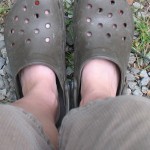 Camp Shoes: If you wear hiking boots, consider removing them once you select your campsite. Boots are heavy and create depressions in the earth. Wear water sandals, Crocs, or other lightweight camp shoes when moving around.
Rare Vegetation: Do not disturb or camp near rare plants or other sensitive vegetation. It can take years for these areas to recover.
Fires: Do not make a fire unless it is permitted in the area. Fires are usually allowed in national forests, but not always. If fires are permitted, burn only dead wood in an existing fire ring. We see signs of people sawing off branches of live trees in desperation of finding firewood. This is not just terrible to the tree but is worthless as firewood because live wood contains water and is extremely difficult to burn. If no fire ring is present, build up a ring with rocks. Be sure to put the rocks back where you found them once you leave the campsite.
Leave No Trace: Remember to practice the leave no trace ethics when camping. This is particularly important in primitive areas. Remove all traces of your site, so there is no evidence that you ever camped there.
Related Posts:
5 thoughts on “How to Pick a Good Campsite”
I don’t recommend Crocs for camp shoes. Yeah, they’re comfy and lightweight, but if something goes wrong with your regular boots/shoes, you will not want to be hiking in them (especially if in steep/rocky terrain). This happened to me. I now carry slightly heavier, lace up water shoes that have decent tread on the bottom.
A pair of super comfortable shoes is always a key for me. I love putting on a nice pair of sandles once I get to camp and take off the boots.
The point you make about safety and theft is one we don’t hear about much but is a reality. We should do our best to protect our stuff without making it a huge part of the trip.
I loved when you talked about finding high ground when camping to avoid floods. We are planning on taking our kids camping in a few weeks and I wanted to make sure we found the best place as well as learn a little more about it. As I see it, taking the time to search the places where you want to stay ahead of time and making sure you have all the equipment needed can help you enjoy your time in nature.
It is interesting that you mentioned that by getting at least a mile away from the roads and parking lots, you can have a more peaceful experience camping. My fiance and I want to go camping before we get married, and we will make sure to stay away from the roads and parking lots. Thanks again for helping us have a more quality time camping as well as helping us be safer in the process! We do not want to be a part of those crime statistics!
Thank you for the info, helpful especially for those who are new to outdoor activities like camping.